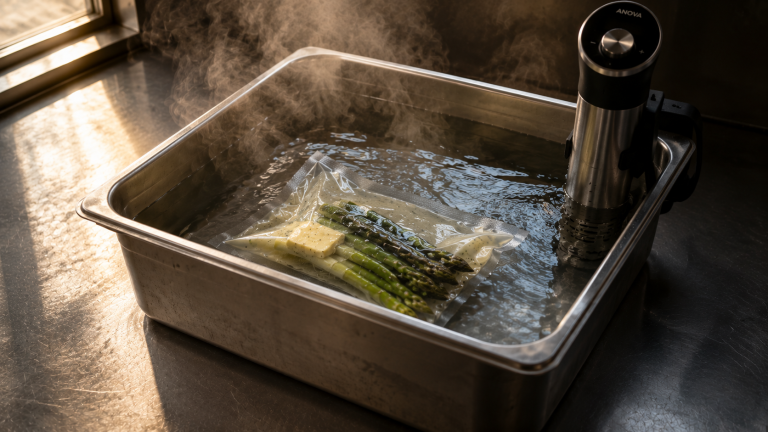
Salt, pressure, time. Now: the bag.
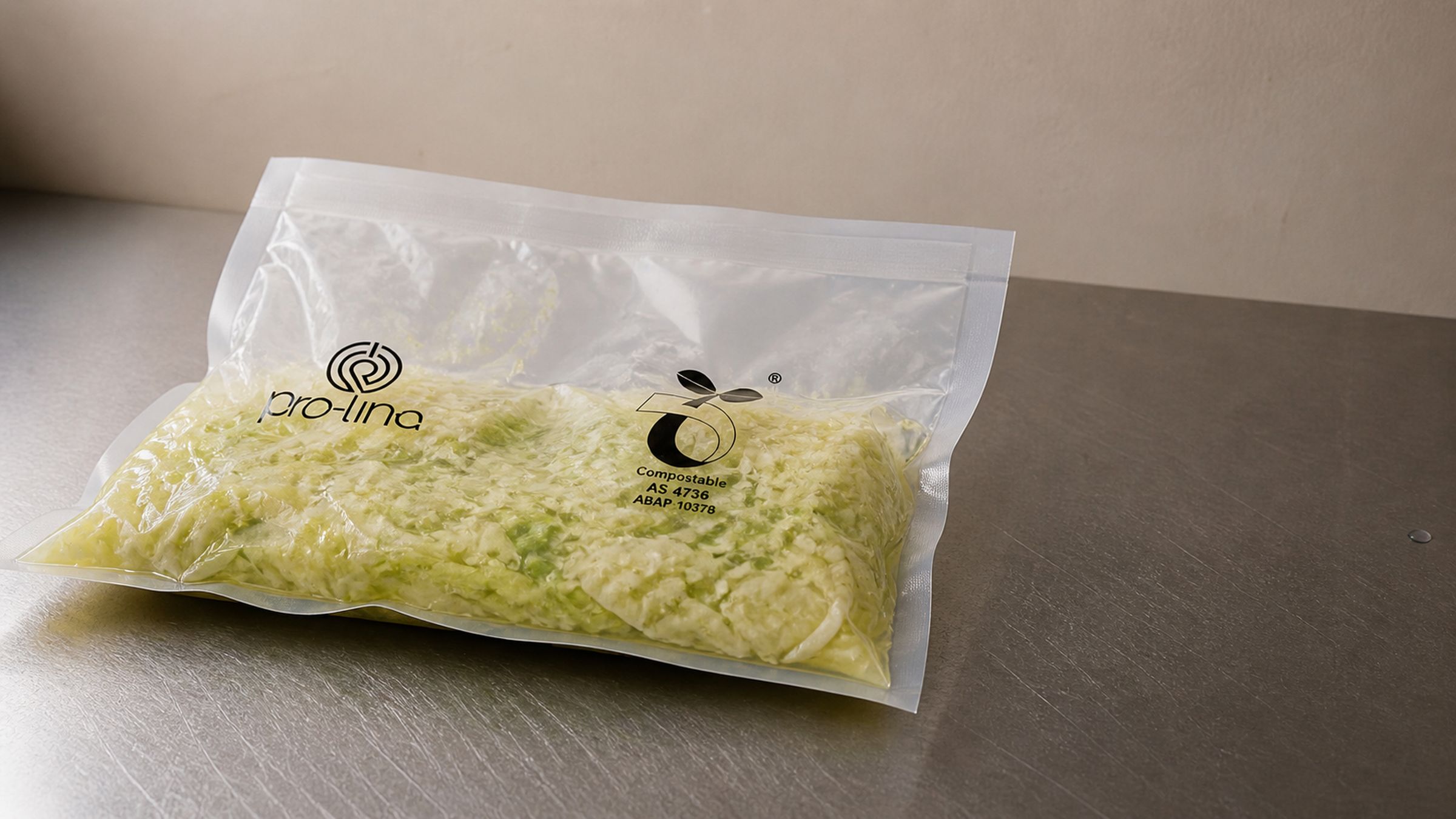
Salt was the first variable. The bag is the second. Most home fermenters underspecify it because the bag looks like a packaging detail. It is not. The bag is the pressure vessel. It has a measurable spec sheet, and the spec sheet decides whether the ferment runs cleanly or whether the bag splits at hour 18 and you lose a kilo of cabbage to the bench.
Twenty years of professional kitchens and several thousand vacuum cycles later, here is what the spec sheet actually contains.
Three things the bag is doing
The bag does three jobs simultaneously, and the third one is the one most people miss.
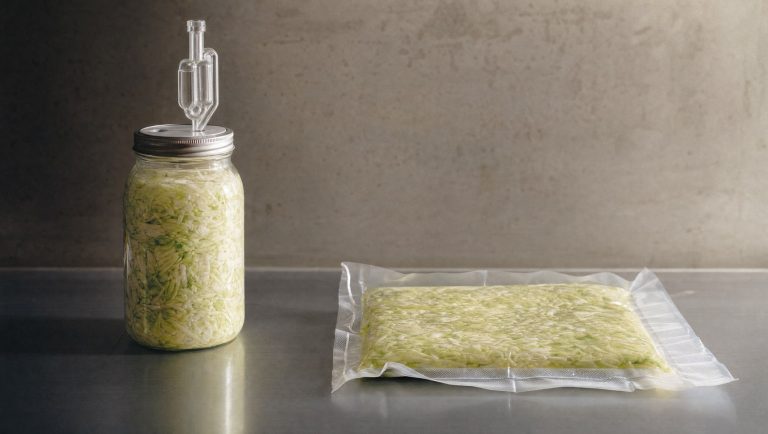
It excludes oxygen. The chamber vacuum cycle pulls atmospheric pressure inside the bag down to roughly 24 kPa, compared to the 101 kPa ambient outside. With the air gone, lactic acid bacteria get the anaerobic environment they need, and the aerobic spoilage organisms that compete for the same substrate are starved.
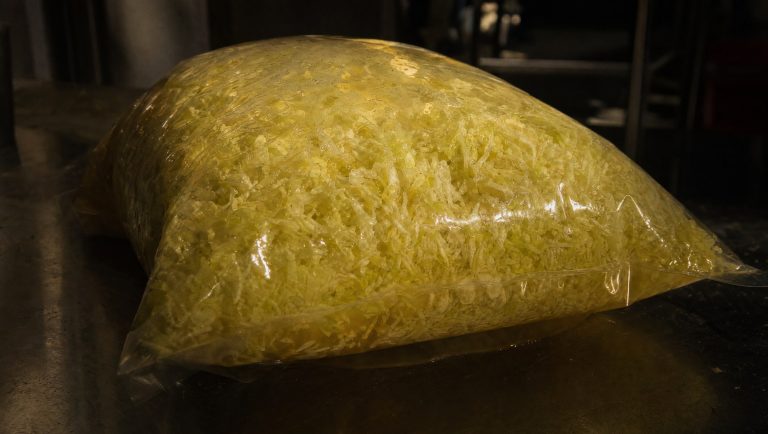
It contains pressure. As fermentation proceeds, lactic acid bacteria release CO2. The bag puffs visibly within 6 to 12 hours. The internal pressure rises from negative to positive. By hour 24 the bag is bulging. The bag has to hold this pressure for the duration of the ferment without splitting at the seam or rupturing through a thin spot.
It maintains a stable interface. The bag has to keep brine in and contaminants out for days, sometimes weeks if the ferment runs long before refrigeration. Any pinhole or seal weakness lets oxygen back in and the bag stops working.
The third job is the one that fails most often in home setups. Cheap bags rated for short-term sous vide cooking are not designed for sustained CO2 pressure. They split. People assume the bag failed because it was overstuffed. Usually the bag failed because it was specced for the wrong job.
What to look for on the box
Four things matter. Get them right and the bag is a non-issue. Get them wrong and the bag becomes the variable that ruins the batch.
Vacuum-chamber-rated, not sous-vide-rated. The bag has to hold positive CO2 pressure for days without flexing or developing a thin spot. Bags rated for short-term sous vide cooking are not built for sustained pressure. If the box only says “sous vide bag,” skip it.
A wide seal. The chamber vacuum seal bar fuses a band of plastic across the open end of the bag. The seal is what the puffing bag pushes against for days. Narrow seals (the default on consumer-grade bags) are the single most common point of failure. Look for a clearly stated wide seal on the box, not a thin line.
Food-grade material. Most chamber vacuum bags are nylon-polyethylene laminate. Nylon outer layer for puncture resistance, polyethylene inner layer for sealing and food contact. Both layers must be food-grade. Look for FDA or equivalent food-grade certification on the bag specification, not just on the box.
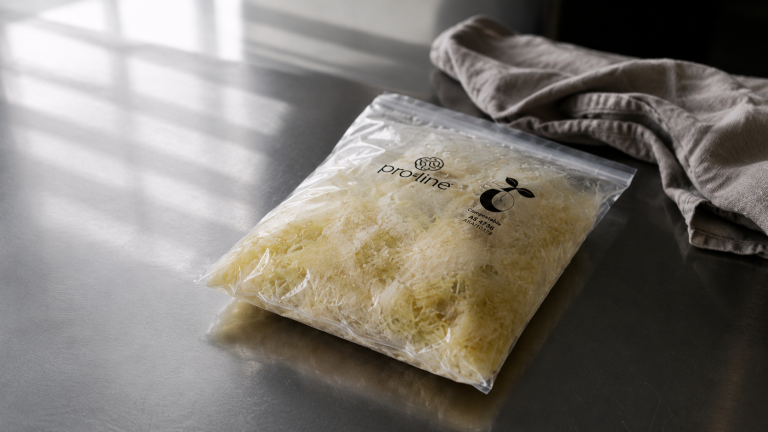
Compostable, if you want it. A growing number of brands now produce compostable chamber vacuum bags using cellulose-based laminates. They work. They cost roughly 30 to 50 percent more per bag than the laminate equivalent. Compost certification varies by jurisdiction. In Australia, look for AS 4736 (commercial compostable) or AS 5810 (home compostable). The home-compostable rating is the harder standard.
What you want on the box: “vacuum chamber compatible,” “food-grade,” and either “nylon-PE laminate” or “compostable cellulose laminate.” If the box only says “sous vide bag,” skip it.
Sizing
The other variable is the bag size itself. Two ratios matter.
The bag should be 1.5 to 2 times larger than the volume of the contents. A 1 kilogram cabbage batch with brine sits comfortably in a 30 by 40 cm bag. The headspace is not wasted. It is the volume the CO2 fills as fermentation proceeds. If the bag is sized too tightly the CO2 has nowhere to go and the bag splits at the seal.
The seal area must extend at least 5 cm beyond the contents. When the bag is loaded into the chamber vacuum, the seal bar lies across the open end of the bag. Any contents touching the seal bar burn the seal and create a weak point. Pack contents to the lower two thirds of the bag, fold the top to keep contents away from the seal area, then seal.
Failure modes and what they tell you
Most bag failures are diagnostic. The way a bag fails tells you exactly which variable was wrong.
Seam split mid-fermentation. Bag rated for sous vide, not chamber pressure, or seal too narrow. Switch to a vacuum-chamber-rated bag with a wide seal.
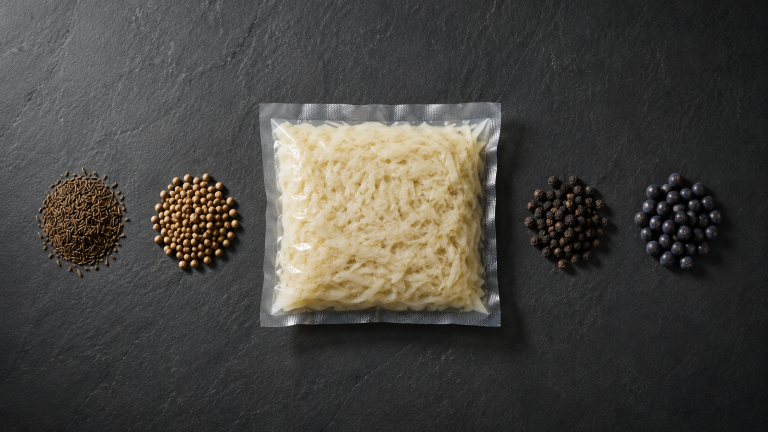
Pinhole leaks within 24 hours. Punctures from a sharp piece of cabbage core, juniper berry, or peppercorn. Trim hard pieces before packing, or wrap in a folded layer of cabbage leaf at the contact point.
Slow leak over days, brine evaporates. Seal not fully formed. The chamber vacuum needs a clean dry seal area. Wipe brine off the seal area with a paper towel before sealing. The seal bar cannot fuse plastic with brine in the way.
Bag lasts but smells off when opened. Not a bag failure. That is a fermentation problem (salt ratio, temperature, contamination). The bag did its job.
If a bag fails repeatedly across multiple batches, the bag is the variable. Switch product. The cost difference between a cheap bag and a properly specced one is roughly $0.30 per cycle. Not worth the lost cabbage.
The system, three variables
Salt, pressure, time. The bag is the pressure vessel for variable two. Get the bag right and the chamber vacuum maintains the anaerobic environment for the duration of the ferment. The biology runs in the conditions it needs.
Time is the third variable. Next week’s Field Note covers it: how long the ferment actually needs at room temperature before refrigeration, why “two hours for sauerkraut” is the lower bound and not a target, and how to read your own bag visually instead of trusting a clock.
The full Field Note with references and the complete archive lives at greenholmes.com.au.
If you want the protocols, the development notes, and the monthly Q&A, Protocol Lab opens that door for $9 a month.
– Ryan, Green Holmes
References
The bag specification material in this Field Note draws primarily on professional kitchen knowledge from twenty years of food-service vacuum sealing. The published research on chamber vacuum fermentation is thin compared to traditional fermentation literature, but the anaerobic mechanism is well documented.
**Peer-reviewed literature**
1. Bautista-Gallego, J., Medina, E. & Sánchez, B. (2020). Role of lactic acid bacteria in fermented vegetables. *Grasas y Aceites*, 71(2), e358. doi:10.3989/gya.0344191
2. Plengvidhya, V., Breidt, F., Lu, Z. & Fleming, H.P. (2007). DNA fingerprinting of lactic acid bacteria in sauerkraut fermentations. *Applied and Environmental Microbiology*, 73(23), 7697-7702. doi:10.1128/aem.01342-07
**Australian compostable packaging standards**
3. Standards Australia (2006). AS 4736-2006: Biodegradable plastics suitable for composting and other microbial treatment. Commercial compostable certification standard.
4. Standards Australia (2010). AS 5810-2010: Biodegradable plastics suitable for home composting. Home compostable certification standard, the harder threshold.
**A note on bag manufacturer specifications**
Bag manufacturer specifications are published by individual suppliers. This Field Note does not endorse a specific brand. The specification language to look for on a product box is listed in the body above.
Field Notes Weekly
One Field Note. Every Monday. Mechanism first, no wellness language.