About
A publication about the systems that decide how we live, eat, and recover.
What Green Holmes is
Green Holmes is a publication about systems. The first system it documents is fermentation, because fermentation is the simplest visible example of a biological system anyone can run on a kitchen bench, in days rather than weeks. The work extends from there into the systems that share fermentation’s grammar: the gut microbiome, nervous system regulation, water and nutrient cycles, the agricultural and ecological loops that bring food into the kitchen in the first place.
The position is plain. Most of what gets written about food, gut health, and recovery is either wellness marketing without mechanism, or laboratory writing without application. Green Holmes is written for the middle. The mechanism is named. The protocol is specific. The translation from research to bench to plate is the editorial work.
What we document
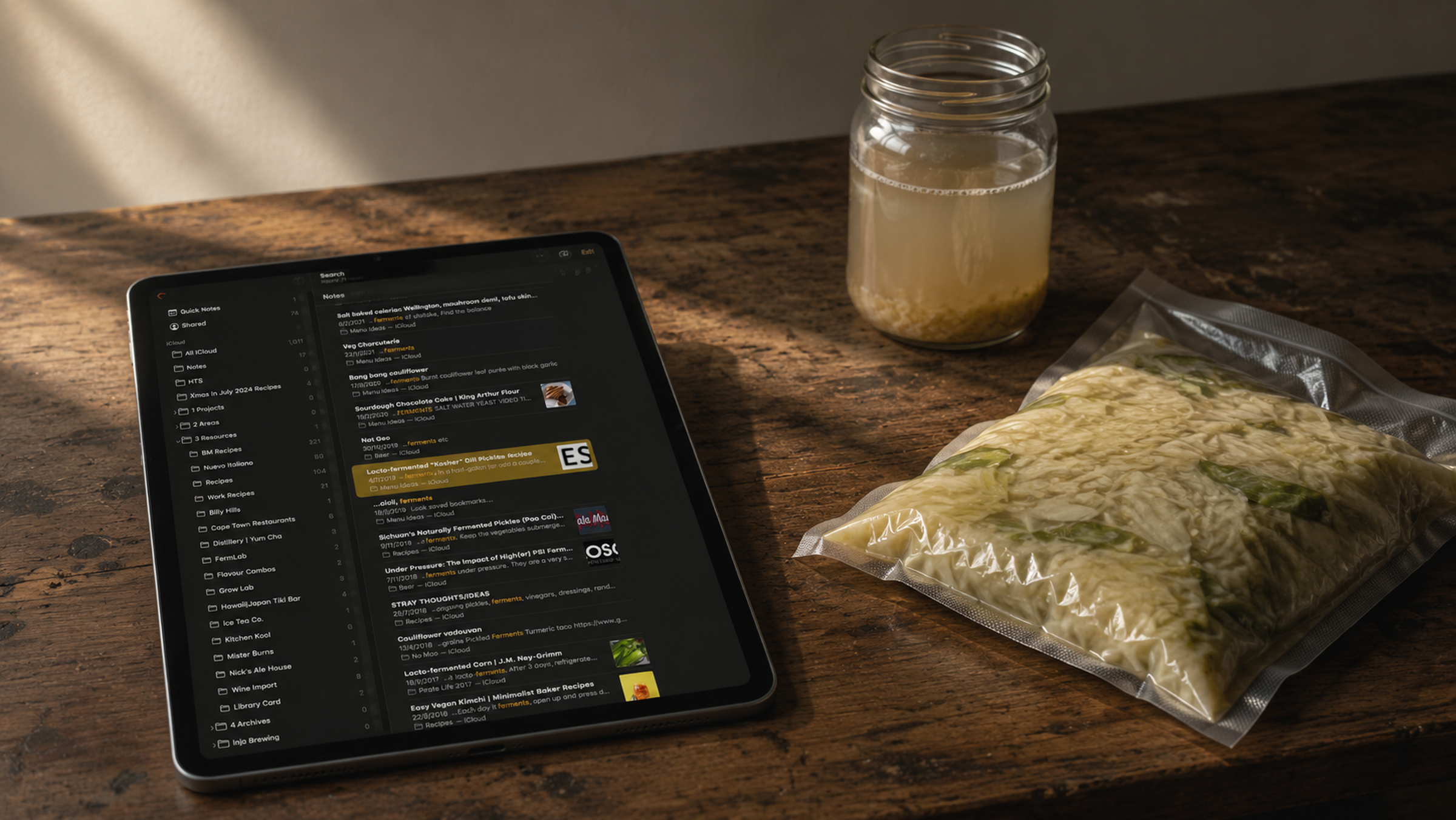
Fermentation. Chamber vacuum technique in particular, because it changes the time signature of the biology from weeks to days, and removes the homesteading register entirely.
The gut microbiome. What the resident community actually does with the food it is given, and what it does not. How bioavailability, signalling, and behaviour shift depending on what reaches the lower bowel.
Nervous system regulation. The systems that decide whether a meal is restorative or extractive, whether sleep consolidates or fragments, whether training adapts or accumulates damage.
Agricultural and ecological inputs. Where the food comes from, what water it grew in, what soil supported it. Aquaponics and integrated food systems sit in this register.
Performance. Strength, mobility, endurance, and cognition treated as outputs of the same biological systems that fermentation, the gut, and the nervous system run.

Who it’s for
Adults with demanding lives. People who train seriously, dine out without apology, hold real jobs, and want the mechanism explained without the marketing register. Readers who would rather know why a 2% salt ratio works than be told the magic of natural fermentation. Readers who already cook well, already read seriously, and want the next layer of specificity.
The publication is not for anyone seeking thirty-day transformations, monastic protocols, or supplement stacks. It is also not for readers who want the science kept in the journal. The mechanism comes out of the journal and onto the bench. That is the point.
What we do not do
We do not write in wellness language. No journeys, no healing, no purity, no sacred. The publication is written in the chef-who-reads-papers register. Plain language. The mechanism explained, not the marketing.
We do not promise transformation. Days, not weeks, for the chamber bag. Years for the body. Both are stated honestly.
We do not run paid conclusions. Where affiliate links exist they are disclosed at the page level and never determine what gets written. Equipment appears on Method because it does something the alternatives cannot. Books appear on the Library because they earned their place in the methodology. When we eventually offer fermentation products and an advanced protocol tier, they will be priced honestly and stated as products, never disguised as editorial.
We do not bait attention. We earn it by being useful, then ask the reader for a relationship in return.
How to read this publication
Three Field Notes carry the methodology most clearly.
Salt, bag, time. The chamber vacuum method end to end. is the protocol piece. Read this first if you want to make a ferment by Friday.
Why fermenting a compound changes how much of it you absorb is the bioavailability piece. Read this if you want to understand what the bacteria actually do for you.
Why the temperature you cook at decides what you eat is the cooked-ferment piece. Read this if you want to know what survives the heat.
The full archive lives at Field notes. The reading list that informed the methodology lives at the Library. The equipment that runs the protocols lives at Method. The people who write the publication live at Contributors.
If you want the next Field Note in your inbox the morning it publishes, subscribe by email. The Field Notes are free and will remain free.
Old craft. New science. Built for now.