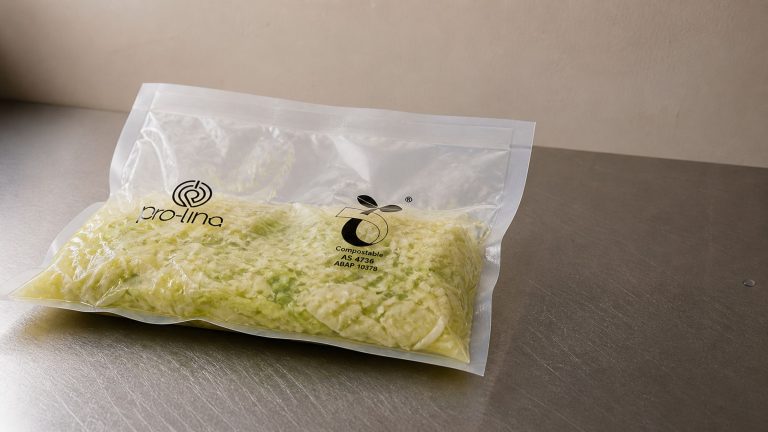
Salt, bag, time. The third variable runs the biology.
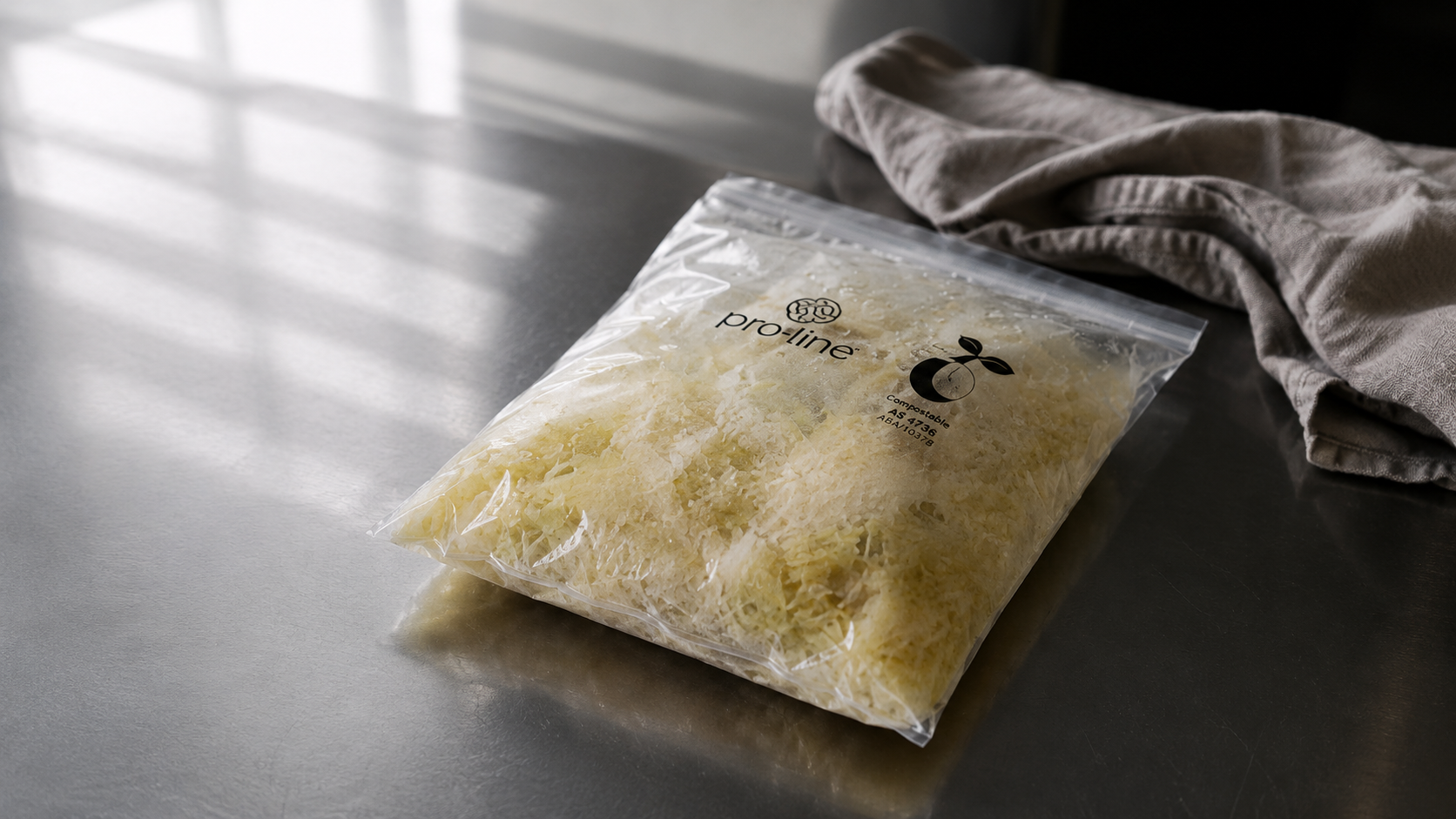
Salt was the first variable. The bag was the second. Time is the third, and unlike the first two, time is not something you set. It is something the bacteria use.
The honest answer to “how long does chamber vacuum fermentation take” is days, not weeks. Not minutes. Not hours. Days. Anyone selling you instant fermentation is selling you something that is not fermentation.
This is the post most people skip. Salt has a number. The bag has a spec sheet. Time looks like waiting. It is not. While the bag sits on the bench, three biological clocks are running, and what comes out depends on which one you let finish.
What the bacteria are actually doing
Three things happen inside the bag at once, on three different timescales.
The first clock is acid. Bacteria eat the sugar in the cabbage and excrete lactic acid. The bag goes from sweet and salty to sharp and sour. By day one or two in a chamber ferment, the acid is strong enough that nothing dangerous can survive in the bag. For the chemists, that means a pH below 4.6, the safety floor for fermented vegetables. A traditional jar takes three to five days to reach the same point. That is the chamber’s real speed advantage on this clock. Pressure pushes brine into the cells, the bacteria get straight to the sugar instead of having to chew through cell walls first, and acid production accelerates.
The second clock is the cast change. The bacteria doing the work are not one strain. They are a rotating crew, and microbiologists call the handover between them microbial succession. The first species in (Leuconostoc mesenteroides) is fast and showy. It makes most of the gas that puffs the bag in the first day or two. It cannot survive its own acid, though, so it dies off as the bag gets sour. A tougher second species (Lactobacillus plantarum) takes over and runs the rest of the ferment. By the end of the first week, that second crew has done most of the flavour work. A 2007 paper in Applied and Environmental Microbiology tracked this shift in detail and found it runs on the same timeline whether the cabbage is in a crock, a jar, or a chamber bag. Pressure does not change biology. It only changes access.
The third clock is flavour. Acid is only one note. The deeper flavours, the umami, the rounded mouthfeel, the slight sweetness at the back of the palate, come from secondary metabolites, the side products bacteria make while they work. Fruit-like and yeasty aromatic compounds (esters and aldehydes), small amounts of natural sugars and gums from the early phase. These build slowly, on a curve that runs days into weeks. A 2018 review in Critical Reviews in Food Science and Nutrition mapped flavour compound development in lacto-fermented vegetables and found the curve plateaus around day ten to fourteen at room temperature. After that, the bag goes into the fridge and the flavour profile is mostly set.
The chamber vacuum sealer compresses the first clock. It does very little to the second. It does almost nothing to the third. That is why the answer is days, not hours.
Three timing decisions, three different products
You are not running one ferment. You are running three potential products and choosing where to stop the clock.
Three days. Light, sharp, fresh. The acid floor is met, so it is safe, but the deeper flavours have barely started to build. The texture is still crisp. Best for raw applications, a fresh kimchi-style garnish on noodles, a bright kraut on a salad, a quick pickle alongside a rich main. This is what a lot of restaurant kitchens make and serve the same week.
Seven days. Rounded, deeper acid, complexity starting to develop. The first wave of aromatic compounds is in the brine. The sharpness has softened. This is the cooked-application kraut, the sandwich kraut, the base for a soup or a braise. Most home fermenters who say “my ferment was good” pulled it here without realising they were making a choice.
Fourteen days. Full complexity. Deep umami. Aromatic compounds at peak. The texture has softened from crisp to yielding. This is the charcuterie-pairing kraut, the slow-spoon condiment, the ferment that sits in the back of the fridge and gets better for the first month. After day fourteen, the curve plateaus and refrigeration slows the biology to a near halt.
Pull when the flavour matches the use you want, not when the timer says. Taste at day three, day five, day seven, day ten. Your tongue is the instrument. The pH meter only tells you when the floor is met.
How to actually run the clock
Two practical points decide whether the clock runs cleanly.
Temperature controls speed, not direction. The lactic acid bacteria that run a vegetable ferment work best between 18 and 24 degrees Celsius. Above 28 degrees, the wrong species start to compete and the flavour goes sharp and acetic. Below 15 degrees, the whole curve slows by 30 to 50 percent and the early gas-producing phase takes longer than it should. A consistent benchtop at 20 to 22 degrees gives you predictable timing. A swinging temperature gives you a moving target.
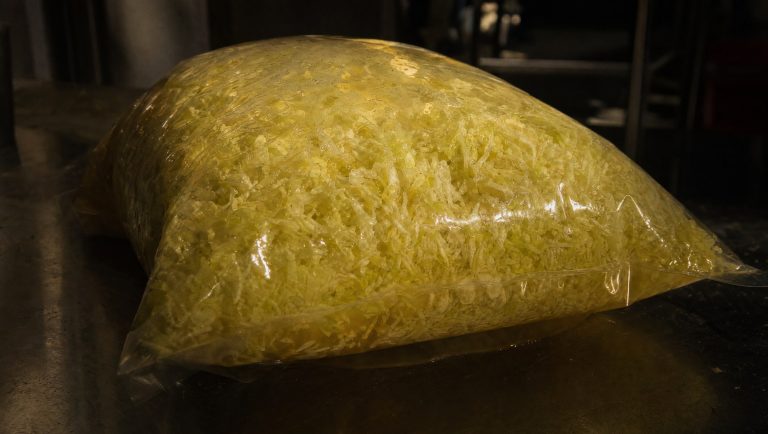
The bag tells you what stage you are in. A flat bag at hour one is a sealed bag with no biological activity yet. A puffed bag at hour twelve is the first crew working at peak, throwing off carbon dioxide as they consume sugar. A taut, fully bulging bag at hour thirty is the transition point where the tougher second crew is taking over and the ferment is heading into its main flavour phase. A slightly less taut bag at day five is normal. The gas production has slowed, the system has stabilised, and you are now in the slow flavour-development phase.
Do not vent the bag. The carbon dioxide is part of the system. Venting introduces oxygen and disrupts the oxygen-free environment the lactic acid bacteria need. If the bag looks like it might split, you have either over-filled it or under-specced the bag (see the bag post). The fix is in the spec sheet, not in venting.
When to refrigerate. When the flavour matches your use. Below 4 degrees Celsius the biology slows to a near halt. The ferment will continue to develop for another week or two in the fridge before the curve flattens completely. Properly run, the bag holds for three to six months refrigerated.
Why time is non-negotiable
Salt sets the chemistry. The bag delivers the pressure. Time runs the biology.
The chamber vacuum sealer is a tool that gives bacteria better access to the substrate. It does not replace what the bacteria do, and what the bacteria do takes days. The cast change from the first crew to the second, the slow acid drop, the slow build of aromatic compounds, none of that compresses below the biological floor. You can run a chamber ferment to safety in twenty-four hours. You cannot run it to complexity in less than three days. You cannot run it to peak in less than two weeks.
This is the same logic that runs in your gut. The bacterial communities in a healthy gut shift across days and weeks in response to what you eat, how you sleep, when you train. A diverse, resilient gut microbiome is not something you build in an afternoon and it is not something a single supplement delivers. It runs on the same biological clock the kraut runs on, for the same reason. Bacteria are not in a hurry, and that turns out to be a feature, not a bug.
Salt was the chemistry. The bag was the engineering. Time is the biology, and the biology is the point.
The next Field Note returns to the kitchen with the full Neutral Base Method end to end, every step from raw cabbage to refrigerated jar, and the three places most home fermenters introduce the variables they are trying to avoid.
Come back next Monday for a new Field Note.
References
Show references
- Plengvidhya V, Breidt F Jr, Lu Z, Fleming HP. DNA fingerprinting of lactic acid bacteria in sauerkraut fermentations. Applied and Environmental Microbiology. 2007;73(23):7697-7702. doi:10.1128/AEM.01342-07
- Xiang H, Sun-Waterhouse D, Waterhouse GIN, Cui C, Ruan Z. Fermentation-enabled wellness foods: a fresh perspective. Food Science and Human Wellness. 2019;8(3):203-243. doi:10.1016/j.fshw.2019.08.003
- Tamang JP, Watanabe K, Holzapfel WH. Review: diversity of microorganisms in global fermented foods and beverages. Frontiers in Microbiology. 2016;7:377. doi:10.3389/fmicb.2016.00377
- Wastyk HC, Fragiadakis GK, Perelman D, et al. Gut-microbiota-targeted diets modulate human immune status. Cell. 2021;184(16):4137-4153. doi:10.1016/j.cell.2021.06.019
Field Notes Weekly
One Field Note. Every Monday. Mechanism first, no wellness language.