Why 2 percent salt is not arbitrary: the science of the brine
Salt is a control variable, not a seasoning
Most people get the salt wrong on their first batch. Not by much. Half a percent either way. But that small variation is the difference between a clean ferment that tastes the way it should and a soft, off-smelling bag that gets thrown out.
After twenty years in professional kitchens, I can tell you the same thing every chef learns the hard way. Salt is not a seasoning in fermentation. It is a control variable. And the chamber vacuum bag amplifies the consequences of getting it wrong, because there is no headspace to forgive you.
The three things salt actually does
Salt does three things in a sauerkraut bag, and all three matter.
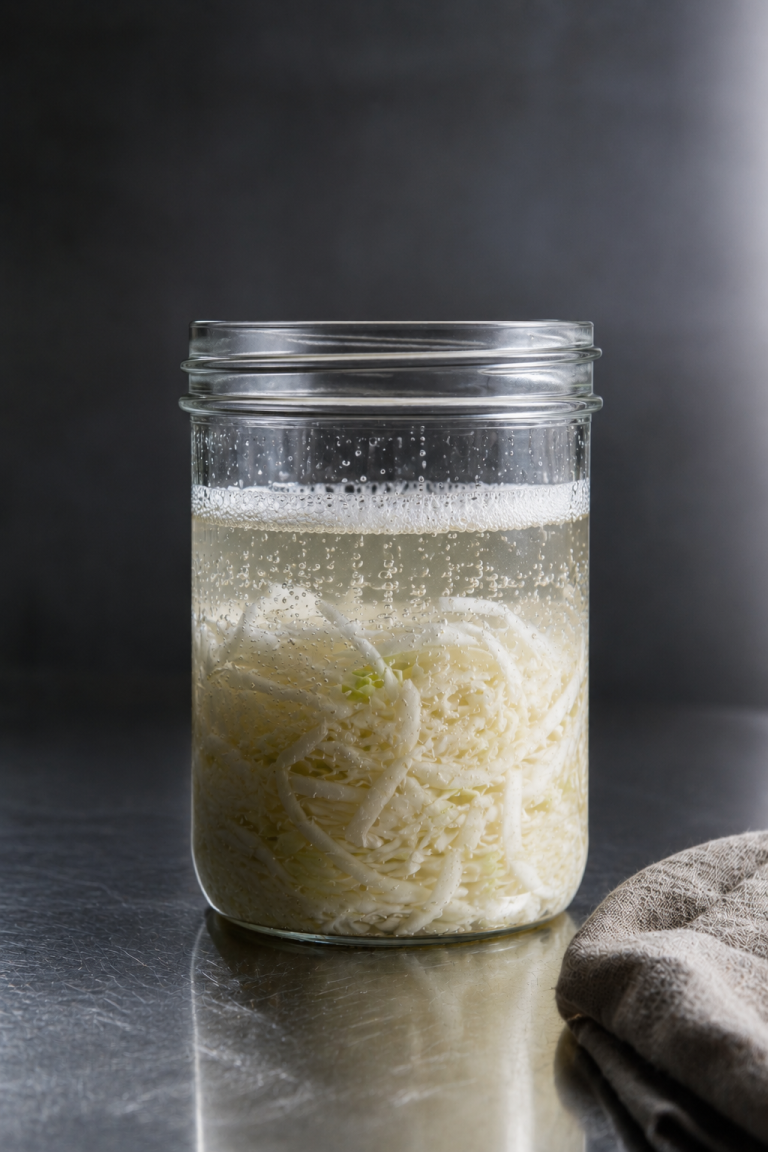
It pulls water out of the cabbage cells through osmosis. That water becomes the brine, which is the medium the bacteria live in. Without enough brine, the cabbage sits dry and the wrong organisms take over the surface.
It selects which organisms survive. Lactic acid bacteria (LAB) tolerate salt much better than the spoilage organisms that compete for the same substrate. Yeasts, gram-negative bacteria, and the pectinolytic enzymes that turn cabbage to mush all get suppressed at the right salt concentration. The LAB get the runway they need.
It controls which LAB dominate, in what order. Leuconostoc mesenteroides runs the early heterofermentative phase. Lactobacillus plantarum takes over the later homofermentative phase and drives the final acidity. The salt concentration determines how cleanly that succession happens.
A 2020 study in the Journal of Applied Microbiology tested four salt concentrations on cabbage fermentation: 0.5%, 1.5%, 2.5%, and 3.5%. The results were definitive. The 2.5% batch had the highest LAB population, the fastest pH drop, the most complete glucose conversion to organic acids, and the best sensory scores. The lower-salt batches showed slower acidification and more variable microbial populations. The 3.5% batch showed suppressed LAB activity and a different metabolite profile.
The 2007 work in Applied and Environmental Microbiology on commercial sauerkraut fermentations confirms the underlying mechanism. Salt concentration has a controlling influence on which species succeed and in what order. The standard 2% to 2.5% range is the band where the LAB succession runs cleanly from heterofermentative to homofermentative, with each population reaching 108 to 109 CFU per gram before handing off to the next.
Below 2%, the picture changes. A 2021 review in European Food Research and Technology documents what happens when the salt is too low to suppress competitors. Spoilage yeasts proliferate. Pectinolytic enzymes from the cabbage itself and from competing microbes degrade plant tissue, which is why low-salt batches go soft. Gas-producing yeasts cause bloating that has nothing to do with healthy LAB activity.
Above 3%, LAB themselves become osmotically stressed. The fermentation slows. Specific species drop out. The flavour profile shifts away from the clean lactic tang most people are looking for.
The 2% to 2.5% band is not a tradition. It is the operational window where the biology works.
How to set the ratio
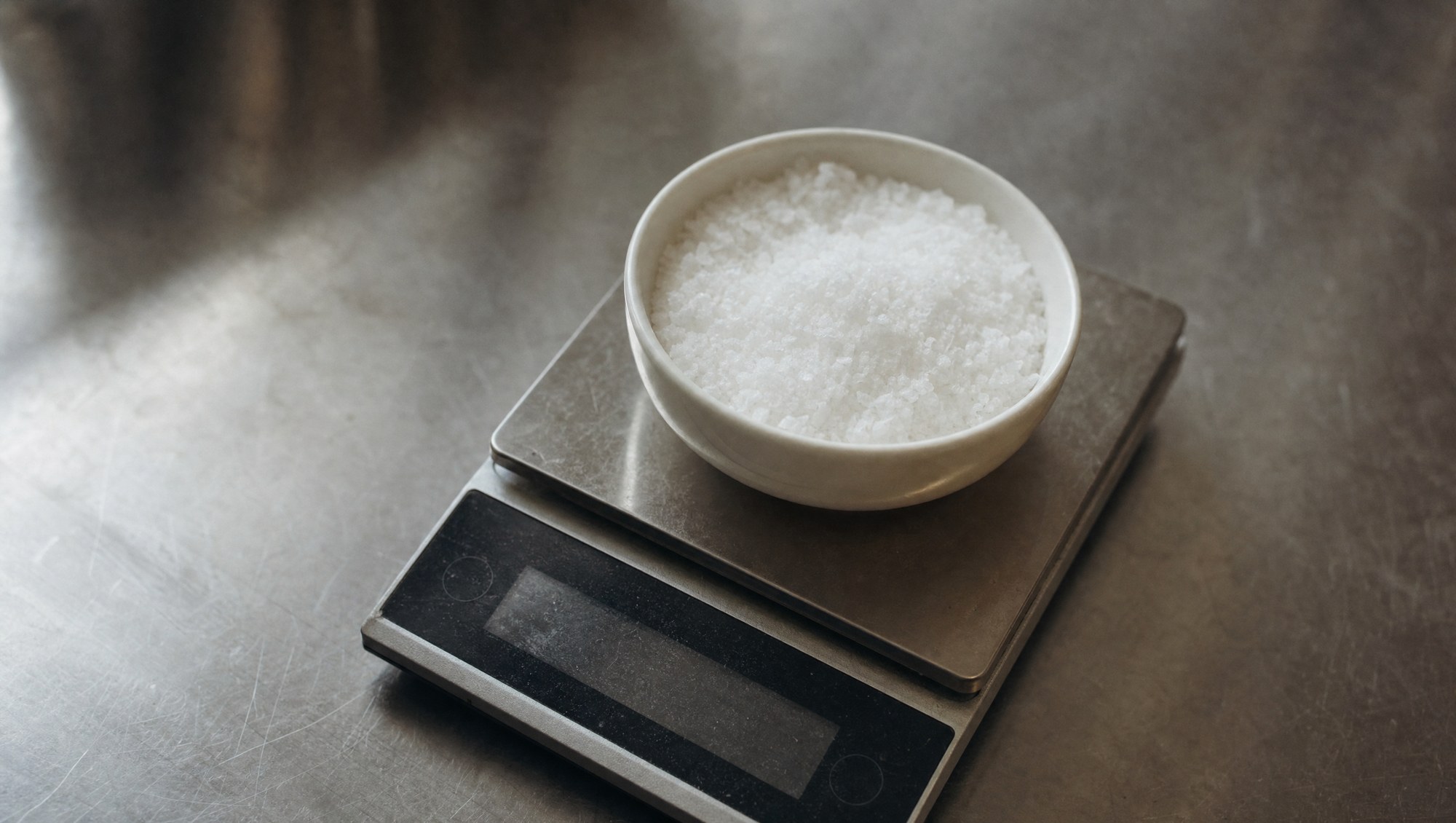
In a chamber vacuum bag, you measure salt as a percentage of total weight, not by volume and not by feel.
Weigh your shredded cabbage in grams. Multiply that number by 0.022. That is the grams of salt to add for a 2.2% ratio, which sits in the middle of the operational window and is the ratio I use as my default.
For a 1000g cabbage batch, that is 22g of salt. For a 750g batch, 16.5g. For a 500g batch, 11g.
Use non-iodised salt. Iodine inhibits LAB activity. Pickling salt, fine sea salt, or kosher salt all work. Avoid table salt with anti-caking agents.
Mix the salt through the shredded cabbage in a bowl and massage it for two to three minutes. You are looking for the cabbage to release brine. The mass should feel wet and shiny when you stop, with visible liquid pooling at the bottom of the bowl.
If you want to add aromatics, this is the point to do it. Three options that pair cleanly with cabbage and earn their place on the bench:
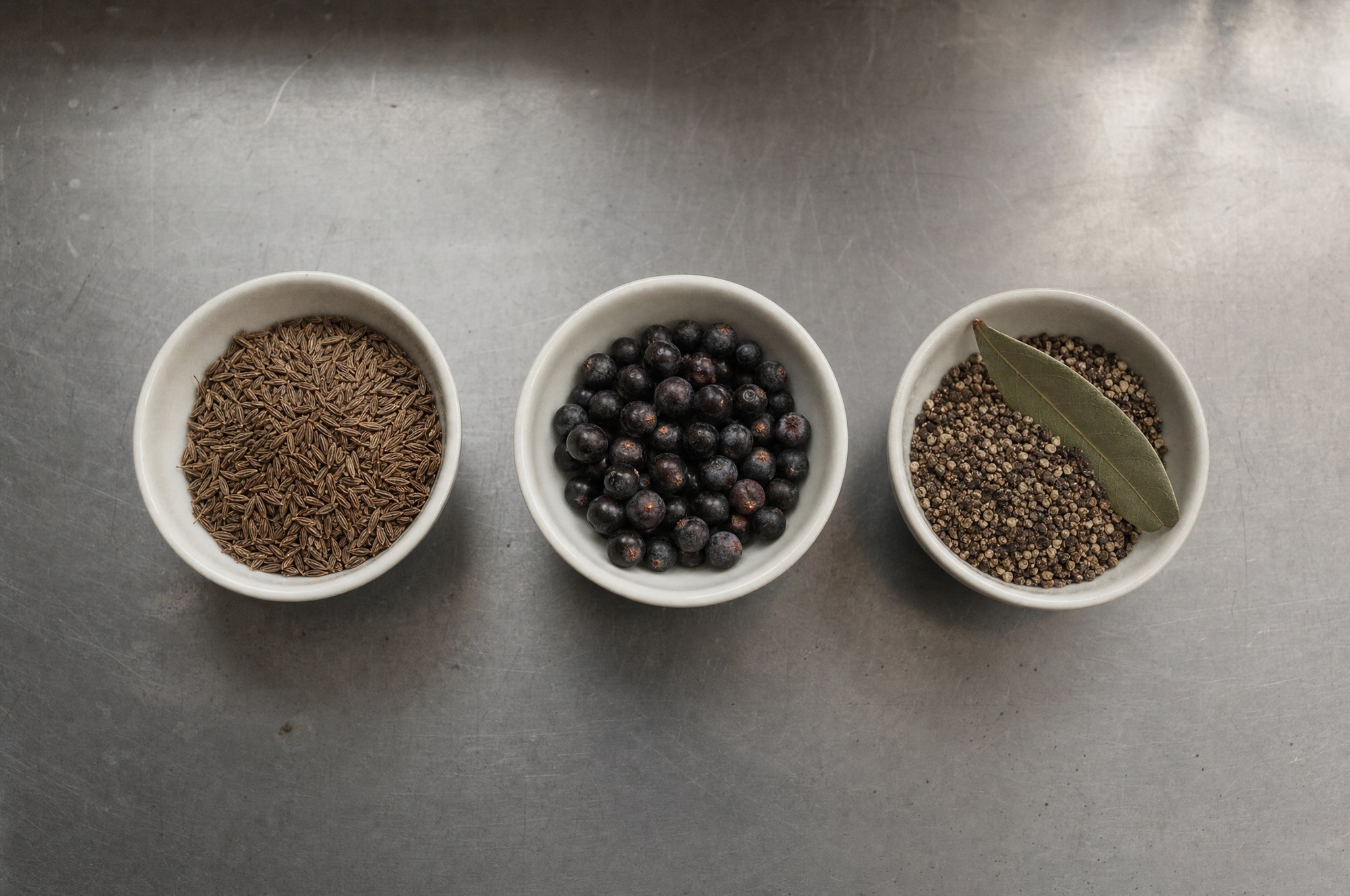
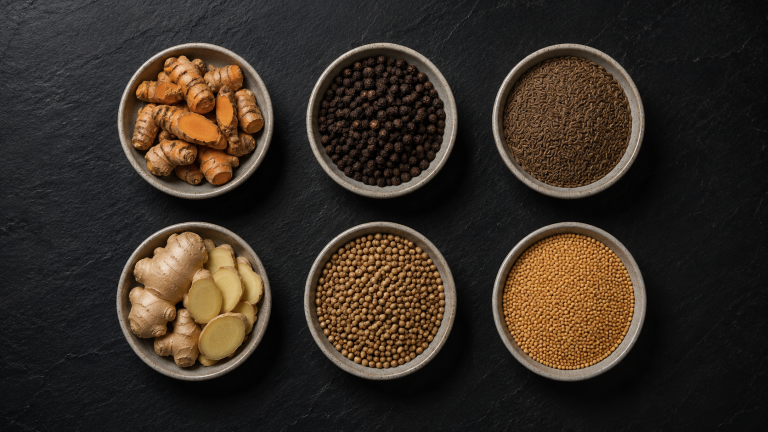
- Caraway seeds — the classic European sauerkraut pairing. One teaspoon per kilogram of cabbage. Adds the warm, slightly aniseed note most people recognise as the flavour of good kraut.
- Juniper berries — chef’s pick. Six to eight crushed berries per kilogram. Resinous, savoury, structured. Works particularly well if the kraut is going to sit alongside game, pork, or roasted root vegetables.
- Black pepper and bay — the simple aromatic. Half a teaspoon of cracked black peppercorns and one fresh bay leaf per kilogram. Quietly lifts the cabbage without taking it anywhere unfamiliar.
Whichever you choose, add it during the salt massage so the spices distribute through the brine, not just the surface.
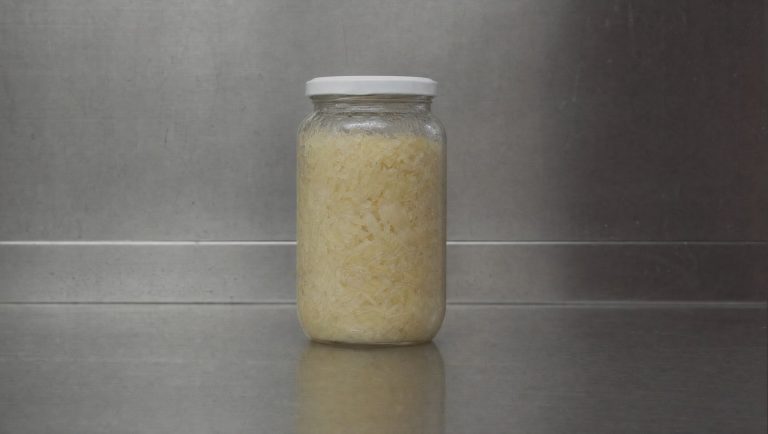
Transfer cabbage, brine, and any spices into a chamber vacuum bag sized at roughly 1.5 to 2 times the volume of the contents. Seal in the chamber vac.
Ferment at 18 to 24°C for at least one day for sauerkraut, then refrigerate below 4°C when the flavour reaches the point you want it. The chamber vacuum compresses the timeline against traditional fermentation, but the biology still needs time to run. Days, not weeks.
The salt ratio you set at the start determines what happens during those days.
Salt, pressure, time
Salt is the first variable in a system that has only three: salt, pressure, and time. Get the salt right and the chamber vacuum handles the pressure. The time takes care of itself. Get the salt wrong and the other two variables cannot save the batch.
Next week’s Field Note covers the second variable: the bag itself. Bag thickness, seal integrity, and what to look for in a vacuum-rated fermentation pouch. Equipment matters more than most home fermenters realise.
Come back next Monday for a new Field Note.
References
Hu, W., Xiu, Z., & Jiang, A. (2020). Effect of salt concentration on microbial communities, physicochemical properties and metabolite profile during spontaneous fermentation of Chinese northeast sauerkraut. Journal of Applied Microbiology, 129(6), 1458-1471. DOI: 10.1111/jam.14786
Plengvidhya, V., Breidt, F., & Lu, Z. (2007). DNA fingerprinting of lactic acid bacteria in sauerkraut fermentations. Applied and Environmental Microbiology, 73(23), 7697-7702. DOI: 10.1128/aem.01342-07
Ballester, E., Ribes, S., & Barat Baviera, J. M. (2021). Spoilage yeasts in fermented vegetables: conventional and novel control strategies. European Food Research and Technology, 248(2), 315-328. DOI: 10.1007/s00217-021-03888-7
Field Notes Weekly
One Field Note. Every Monday. Mechanism first, no wellness language.