What wine actually does to your gut microbiome

In twenty years of professional kitchens, the lesson that stuck wasn’t technique. It was proportion. Too much salt ruins the dish. Too much heat ruins the protein. Too much of anything, applied without understanding, produces a predictable result. Wine was no different. A glass with a good meal, food still on the table, conversation still running, felt like one thing. The same amount standing at the pass after a long service felt like something else entirely. It took years before I had the science to explain what my body already knew.
The standard advice on alcohol and gut health tends to run in one direction: inflammatory, disruptive, best avoided. That’s a reasonable starting point. It’s also incomplete. It mistakes the variable for the constant.
The polyphenol argument
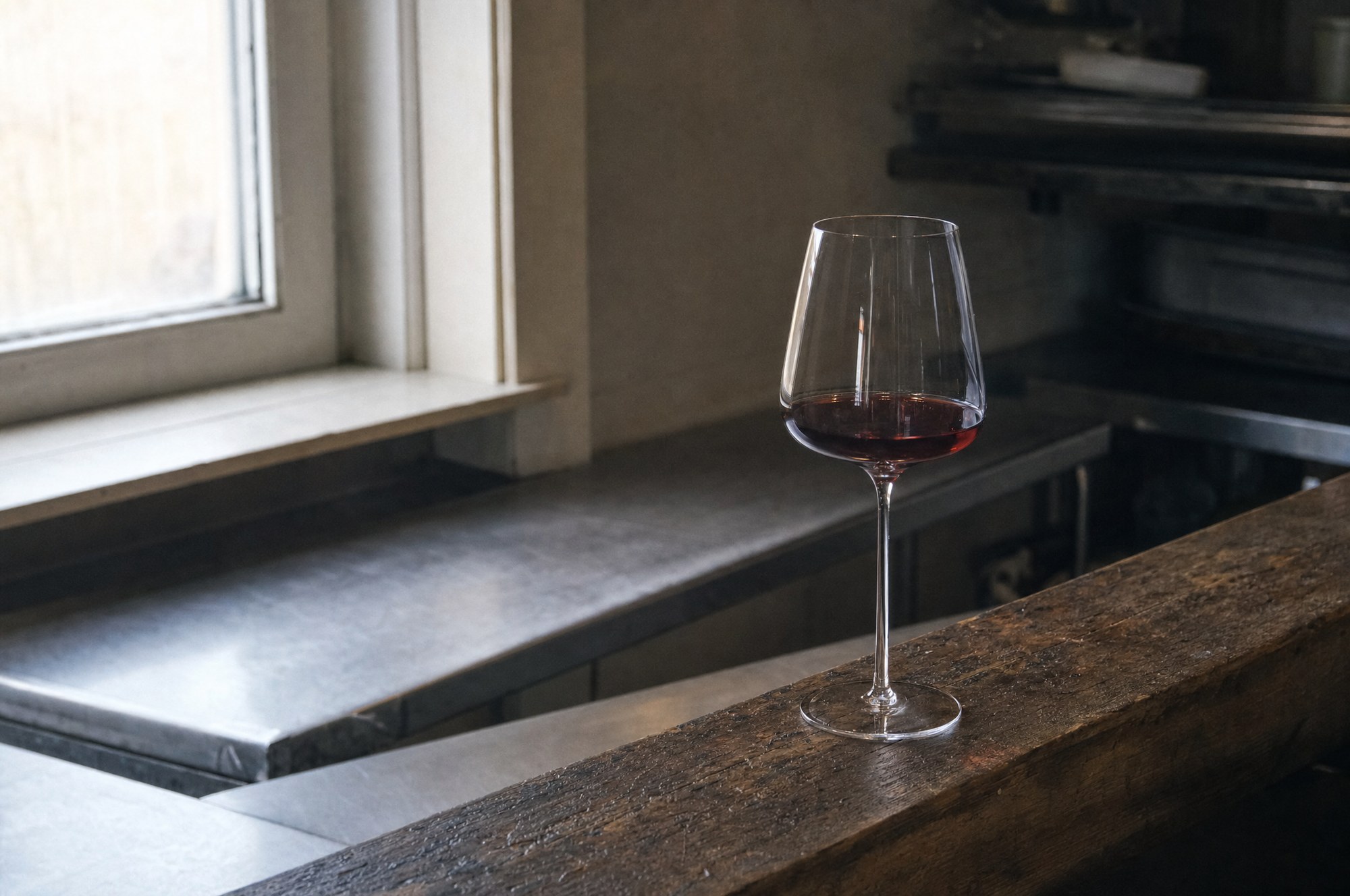
Red wine is not a simple substance. The ethanol is one component. The polyphenols, the compounds derived from grape skins during fermentation, are another category entirely, and the two have different effects on gut bacteria.
In 2020, researchers published findings in Gastroenterology that followed red wine consumption across three independent cohorts. The study found that red wine drinkers had measurably higher gut microbiota alpha-diversity compared to non-drinkers, beer drinkers, and white wine drinkers. Alpha-diversity is a measure of the number and variety of species present in the gut ecosystem. More diversity, in consistent research findings, correlates with better metabolic function, stronger immune response, and more resilient stress signalling. This is an observational study, not a controlled trial, and correlation is not causation. But three independent cohorts is not a trivial finding.
The mechanism sits in the polyphenols themselves. Resveratrol, quercetin, catechin, and gallic acid are the primary compounds. They function as prebiotic substrates: they are not absorbed in the small intestine and reach the colon largely intact, where gut bacteria metabolise them and produce short-chain fatty acids in the process. A 2023 review in Current Issues in Molecular Biology confirmed that moderate red wine consumption increases populations of two particularly well-researched bacterial species, Akkermansia muciniphila and Faecalibacterium prausnitzii. Both are considered health-associated. Akkermansia is linked to gut barrier integrity. Faecalibacterium is linked to anti-inflammatory signalling.
A human intervention study cited in the review had 19 volunteers consume red wine and tracked fecal polyphenol concentrations. The results showed a positive correlation between polyphenol concentration in the gut and short-chain fatty acid production. SCFAs, butyrate in particular, are the primary fuel source for colonocytes, the cells lining the colon wall. That is the mechanism. Not the alcohol. The fermented grape compounds acting as fuel for beneficial bacteria.
The cleaner evidence comes from dealcoholised red wine studies. Researchers gave 10 healthy male volunteers 272mL per day of dealcoholised red wine for 20 days, published in the American Journal of Clinical Nutrition. Gut microbiota composition shifted. When the ethanol was removed, the polyphenol effect remained. This is the critical distinction that often gets lost in the broader conversation: the compound doing the useful work is not the alcohol. The alcohol is, as one researcher puts it, a universal toxin your body recovers from in small amounts and cannot recover from in large ones.
What this doesn’t mean
It does not mean wine is good for you in any general sense. Heavy or chronic alcohol consumption has a well-documented dysbiotic effect: it degrades tight junction integrity in the gut lining, elevates intestinal permeability, and shifts the microbiome toward populations that produce more acetaldehyde, a toxic metabolite of alcohol metabolism. The damage compounds with frequency and volume.
The effect size in the polyphenol studies is also modest. This is not a therapeutic intervention. It is an observation that low-to-moderate red wine consumption, in the context of a diet that otherwise supports gut diversity, does not appear to do the damage the simplified version implies, and in some cases may contribute marginally to the ecosystem. The polyphenols in a glass of red wine are also available in blueberries, dark chocolate, olive oil, and fermented foods. If you don’t drink, there is no reason to start for gut health.
The sample sizes in most intervention studies are small. The observational evidence is more robust than the trial evidence. Treat these findings accordingly.
A practical framework

The variable that matters most is context. A glass of red wine with food, eaten slowly, is a different physiological event to the same volume consumed fasted and quickly. Food slows gastric emptying, which affects the rate at which alcohol reaches the small intestine and the concentration at which it does. This is not just anecdote. It is basic gastric physiology.
Type matters. Polyphenol content varies significantly between wine styles. Red wine has substantially higher polyphenol concentrations than white wine or beer. Within red wines, skin contact time and grape variety affect the final polyphenol load. Tannic, full-bodied reds, Cabernet Sauvignon, Shiraz, Malbec, tend to have higher concentrations than lighter styles. This is the same reason your chef made a reduction from a full-bodied red rather than a white.
Timing matters. With food, not fasted. The gut microbiome is not the only system affected by alcohol, and the hepatic processing of ethanol is slower and more manageable when the stomach is not empty. A glass with dinner is meaningfully different to a glass at the end of a dry day.
Frequency and volume matter most. One to two standard drinks, not daily, is the dose range where the observational data sits. The polyphenol benefit does not scale with volume. The dysbiotic damage does.
What you do the rest of the week matters more than any of the above. The microbiome studies that show positive diversity outcomes from red wine are consistently conducted in populations eating Mediterranean-adjacent diets: high vegetable variety, fermented foods, olive oil, legumes. The polyphenols from wine are one small signal in a broader ecosystem. They are not sufficient to offset a poor dietary baseline, and they are not necessary in a strong one.
The larger system
The gut microbiome is not a morality project. It responds to inputs, frequency, variety, and consistency over time. A single glass of wine is not the variable that determines the outcome. Twenty years of eating patterns, sleep quality, stress load, and movement are the variables that determine the outcome.
What the kitchen taught, eventually, was that the best food came from understanding the ingredients, not from fear of them. Salt used well is not the problem. Fat used well is not the problem. Wine, understood in context, is not the problem either.
The Inner Ecosystem operates by the same logic. Feed it well most of the time. Understand the mechanism when you’re not. The system is more resilient than most accounts suggest, and less forgiving of chronic neglect than most people assume.
If you want to understand the fermented foods side of this equation, the Neutral Base Method is where the protocol starts.
References
View references
Le Roy CI, Wells PM, Si J, et al. Red wine consumption associated with increased gut microbiota alpha-diversity in 3 independent cohorts. Gastroenterology. 2020;158(1):270-272.e2. DOI: 10.1053/j.gastro.2019.08.024
Buljeta I, Pichler A, Simunovic J, et al. Beneficial effects of red wine polyphenols on human health: comprehensive review. Current Issues in Molecular Biology. 2023;45(2):782-798. DOI: 10.3390/cimb45020052
Queipo-Ortuño MI, et al. Influence of red wine polyphenols and ethanol on the gut microbiota ecology and biochemical biomarkers. American Journal of Clinical Nutrition. 2012. DOI: 10.3945/ajcn.111.027847
Field Notes Weekly
One Field Note. Every Monday. Mechanism first, no wellness language.