Most fermented food on shelves is already dead
Most fermented food on shelves is already dead
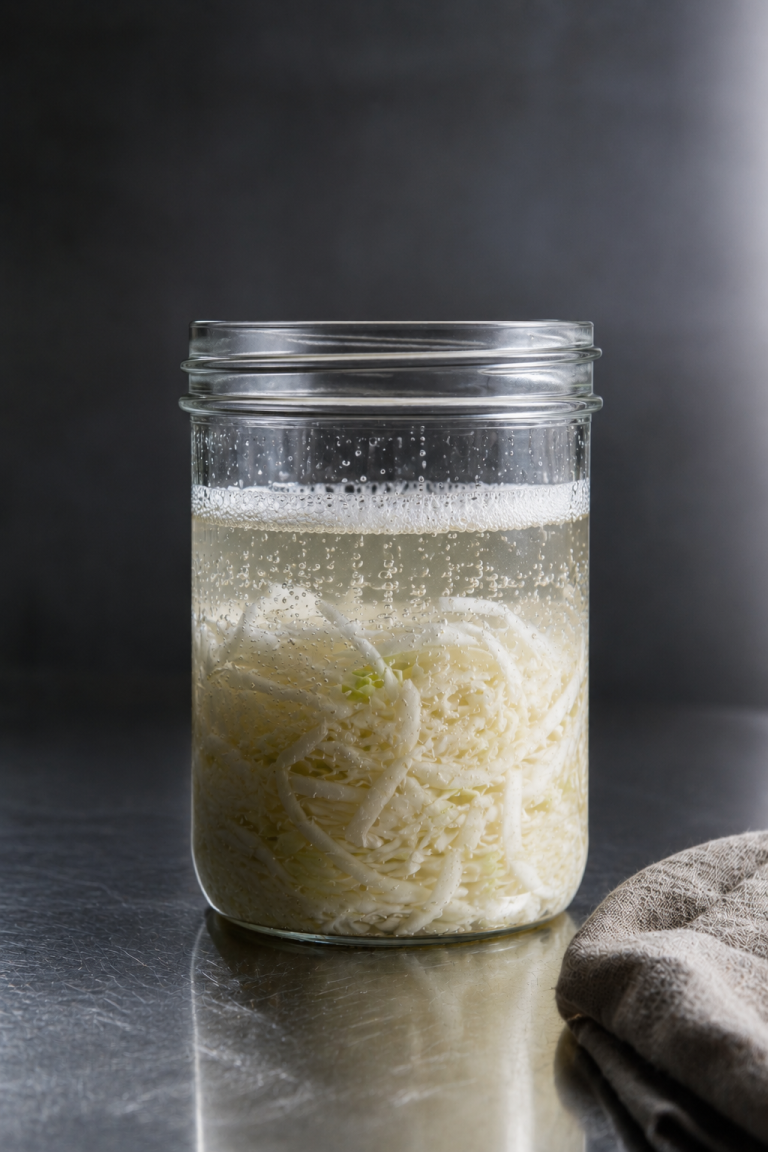
Walk into any supermarket and you will find an entire section dedicated to fermented foods. Sauerkraut. Kimchi. Kombucha. Pickles. The labels say “fermented” and the prices say “premium.” But most of those products have been pasteurised after production, which means the lactic acid bacteria responsible for the gut health benefits have been killed before the jar reaches you.
This is not a fringe claim. It is standard practice in commercial food production. And it is the single most important fact most people never learn about the fermented food they buy.
I spent twenty years in professional kitchens. In those environments, fermentation was a live process: bacteria doing real work in real time, monitored by people who understood what was happening at a microbial level. The gap between what a kitchen produces and what ends up on a shelf is not a matter of degree. It is a matter of biology.
Why pasteurisation changes everything
Lactic acid bacteria, primarily species of Lactobacillus and Leuconostoc, are the organisms that drive vegetable fermentation. They convert sugars into lactic acid, dropping the pH below 4.6 and creating an environment where harmful organisms cannot survive. Research published in Applied and Environmental Microbiology identified at least ten distinct LAB species involved in sauerkraut fermentation alone, with L. plantarum emerging as the dominant strain once the ferment reaches its final acidic state.1
Those bacteria are the product. They are why fermented food has a measurable effect on your microbiome.
A 2021 human trial published in Cell found that a diet high in fermented foods increased gut microbiome diversity and reduced markers of systemic inflammation across 36 participants over a 10-week period.2 The key variable was not the food itself. It was the live microbial communities the food delivered to the gut.
Pasteurisation eliminates those communities. Heat treatment after fermentation kills the LAB that produced the flavour and the acid, leaving you with the taste of fermentation but none of the biological function. You are paying for a process that has already been reversed.
The anaerobic advantage
In a professional kitchen, fermentation happens in controlled anaerobic conditions. The absence of oxygen gives lactic acid bacteria a competitive advantage over spoilage organisms and aerobic moulds. Research in Grasas y Aceites confirmed that lactic acid fermentation produces acidification to pH values below 4.6, which inhibits the growth of both spoilage and pathogenic microorganisms.3
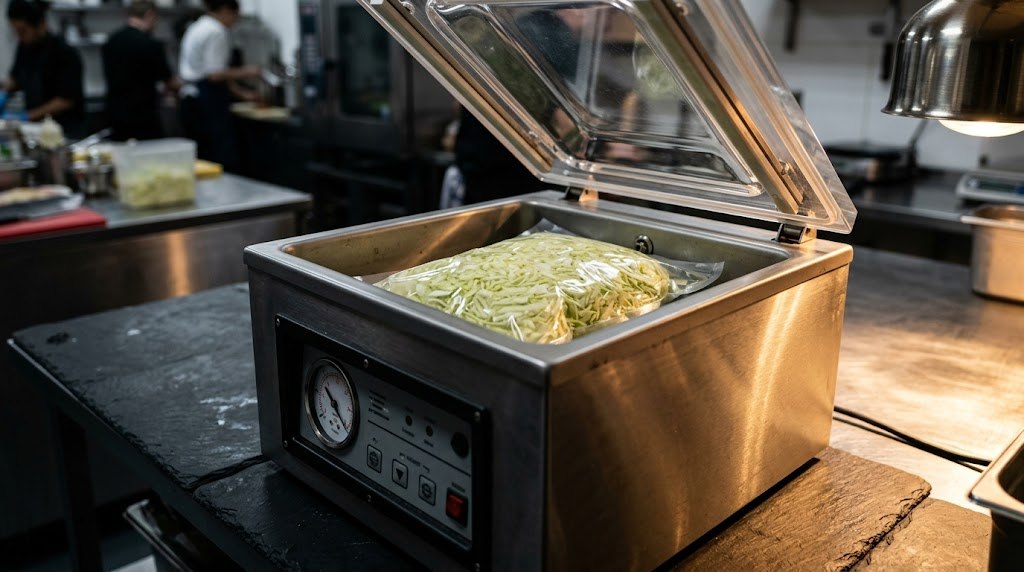
Chamber vacuum sealers take this further. By reducing atmospheric pressure inside the bag to approximately 24.1 kPa (compared to the normal 101.3 kPa), a chamber vac removes not just the air around the food but the air trapped inside the plant tissue itself. This ruptures cell membranes, releasing intracellular sugars, enzymes, and phytochemicals directly into the surrounding brine. The result is that beneficial bacteria have immediate access to the nutrients they need to dominate the ferment.
In vacuum-sealed ferments, Lactobacillus reaches higher concentrations and establishes dominance faster than in traditional open-crock methods. The anaerobic environment created by vacuum film is more stable and consistent than a liquid surface seal, where oxygen exposure at the top of the vessel is always a variable.
What this means in practice
If you want the microbiome benefits that the research describes, you need live fermented food. Not pasteurised. Not shelf-stable. Live.
The practical barrier has always been time. Most people assume fermentation takes weeks. Traditional sauerkraut takes days, not weeks: three to seven days at room temperature depending on salt concentration and ambient conditions. With a chamber vacuum sealer, that window compresses to two to four hours for sauerkraut, four to six hours for kimchi, and one to two hours for pickles.
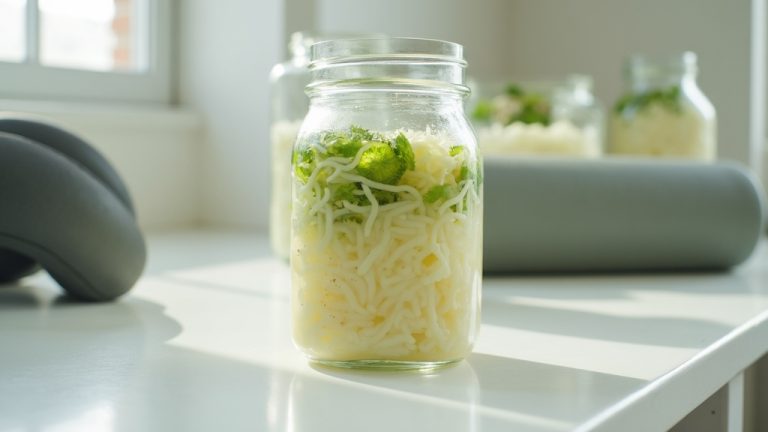
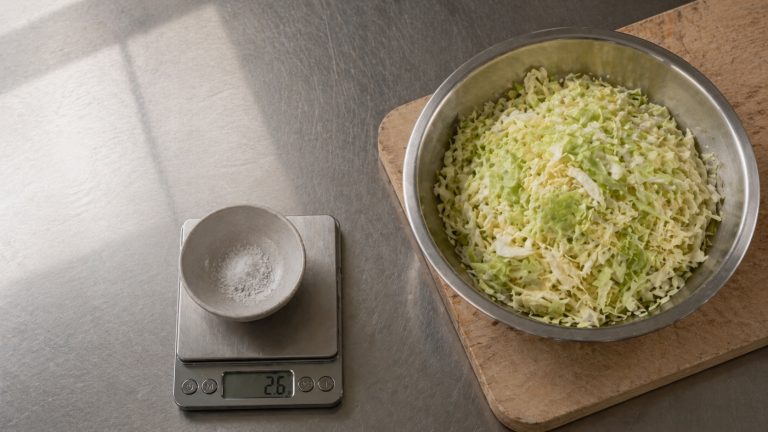
The method is straightforward. Shred your cabbage. Weigh it precisely. Add salt at 2 to 2.5% of total weight. Massage until the brine releases. Place it in a compostable vacuum bag sized 1.5 to 2 times larger than the contents. Chamber vacuum seal. Hold at room temperature (18 to 24 degrees Celsius) and monitor. The bag will puff with CO2 as the bacteria produce gas. That is normal. Refrigerate below 4 degrees once the flavour reaches where you want it.
pH must drop below 4.6 for safety. Salt ratio must stay within 2 to 2.5% of total weight. Refrigeration below 4 degrees once fermented. These are not suggestions. They are non-negotiable food safety parameters.
What you produce at home in a vacuum bag is biologically active. What you buy from most shelves is not.
The system, not the product
This is the core argument for learning to ferment rather than buying fermented products. The research on gut microbiome diversity does not describe the benefits of eating preserved vegetables. It describes the benefits of consuming live microbial communities. When you ferment at home, you control the biology. You know the bacteria are alive because you can see the bag puff with CO2. You know the pH is safe because you can measure it.
Professional kitchens have operated this way for years. The equipment that once sat behind the pass in a commercial kitchen is now available at a scale and price point that makes it practical for a home bench. The technique is the same. The microbiology is the same. The only thing that has changed is access.
If you are new to chamber vacuum fermentation, start with the Field Notes archive for the full breakdown of the method, the equipment, and the science behind it.
References
- Plengvidhya, V., Breidt, F., Lu, Z. & Fleming, H.P. (2007). DNA fingerprinting of lactic acid bacteria in sauerkraut fermentations. Applied and Environmental Microbiology, 73(23), 7697–7702. doi:10.1128/aem.01342-07
- Wastyk, H.C., Fragiadakis, G.K., Perelman, D. et al. (2021). Gut-microbiota-targeted diets modulate human immune status. Cell, 184(16), 4137–4153. doi:10.1016/j.cell.2021.06.019
- Bautista-Gallego, J., Medina, E. & Sánchez, B. (2020). Role of lactic acid bacteria in fermented vegetables. Grasas y Aceites, 71(2), e358. doi:10.3989/gya.0344191
Field Notes Weekly
One Field Note. Every Monday. Mechanism first, no wellness language.