Vagal tone is the volume knob between your gut and your brain

Last week the vagus nerve was the headline. It is the main physical line between your gut and your brain, and most of its traffic runs upward, from the organs to the head.
That was the map. This week is about a dial on the map.
The nerve is not just on or off. It has a resting level of activity, and that level has a name. It is called vagal tone, and the useful part is that it behaves like a volume knob rather than a fixed setting.
What tone actually means
Think of the vagus as a line that is always carrying a low background signal, even when nothing dramatic is happening. Vagal tone is how strong that background signal sits.
High tone is the calm, well-regulated setting. It is the state where your heart rate settles quickly after a stressor, your digestion runs, and the system reads as safe.
Low tone is the opposite. The system stays keyed up, slower to come down, quicker to flare.
The reason this matters is not spiritual. It is that tone is measurable and, more to the point, it moves.
Most of your nervous wiring is laid down and left alone. This one setting responds to what you do.
That is the whole claim for the week, said plainly. The vagus is the main wire between gut and brain, and its tone can be raised.
Where the gut comes into it
Here is the part that ties back to everything this site is built on. The gut is not a bystander on this wire. It is one of the things sending signal up it.
The cleanest demonstration comes from a mouse, and I will label it as a mouse because that is the honest thing to do. In a study in the Proceedings of the National Academy of Sciences, feeding healthy mice a single Lactobacillus strain lowered their stress hormone, reduced anxiety-type and depression-type behaviour, and shifted the calming GABA receptors in the brain.
Then the researchers cut the vagus nerve. Every one of those effects disappeared.
Be straight about what that is. It is a mouse, fed one isolated strain, with its nerve surgically severed. Read it as a mechanism, not as a result you can expect from your dinner.
What it establishes is the direction of cause. A change down in the gut reached the brain, and it travelled on the vagus. Cut the wire and the message never arrives.
So the gut is not only wired to the brain. It is one of the hands on the volume knob.
That is why the food side of this is not a tangent. It is the same conversation.
The human side, kept honest

You cannot take a mouse result and hand it to a person. So what do we actually know about tone in people.
We know vagal tone is real and measurable in humans. The common proxy is heart rate variability, the small beat-to-beat variation in your pulse. Higher variability tends to track with higher vagal tone and a system that recovers well.
We also know that slow paced breathing raises vagal tone. Breathe out for longer than you breathe in, slow the whole thing down, and you nudge the nerve toward its calm setting. This is general physiology, not a fringe claim, and it is one of the few nervous-system levers that is genuinely under your direct control.
Notice what I am not saying. I am not giving you a number, a percentage, or a promise that a particular food raises your vagal tone by a particular amount in humans. The mouse study does not license that, and I am not going to invent a figure to make the point land harder.
What we have is two solid footholds. The mouse mechanism shows the gut can drive this wire. The human physiology shows the tone on this wire can be raised.
The bridge between them, the human gut-to-tone claim at a specific dose, is not settled. I am flagging it as unsettled rather than dressing it up.
What this changes on the plate, and what it does not
The temptation is to reach for a shortcut. A breathing app, a strain, a single switch, and a mood you audit every evening. The honest version is more boring and more like cooking.
There are two hands on the knob and you can use both. One is breathing, slow and paced, which acts directly on the nerve. The other is feeding the gut that sits on the other end of the wire, steadily, the same way you would build diversity.
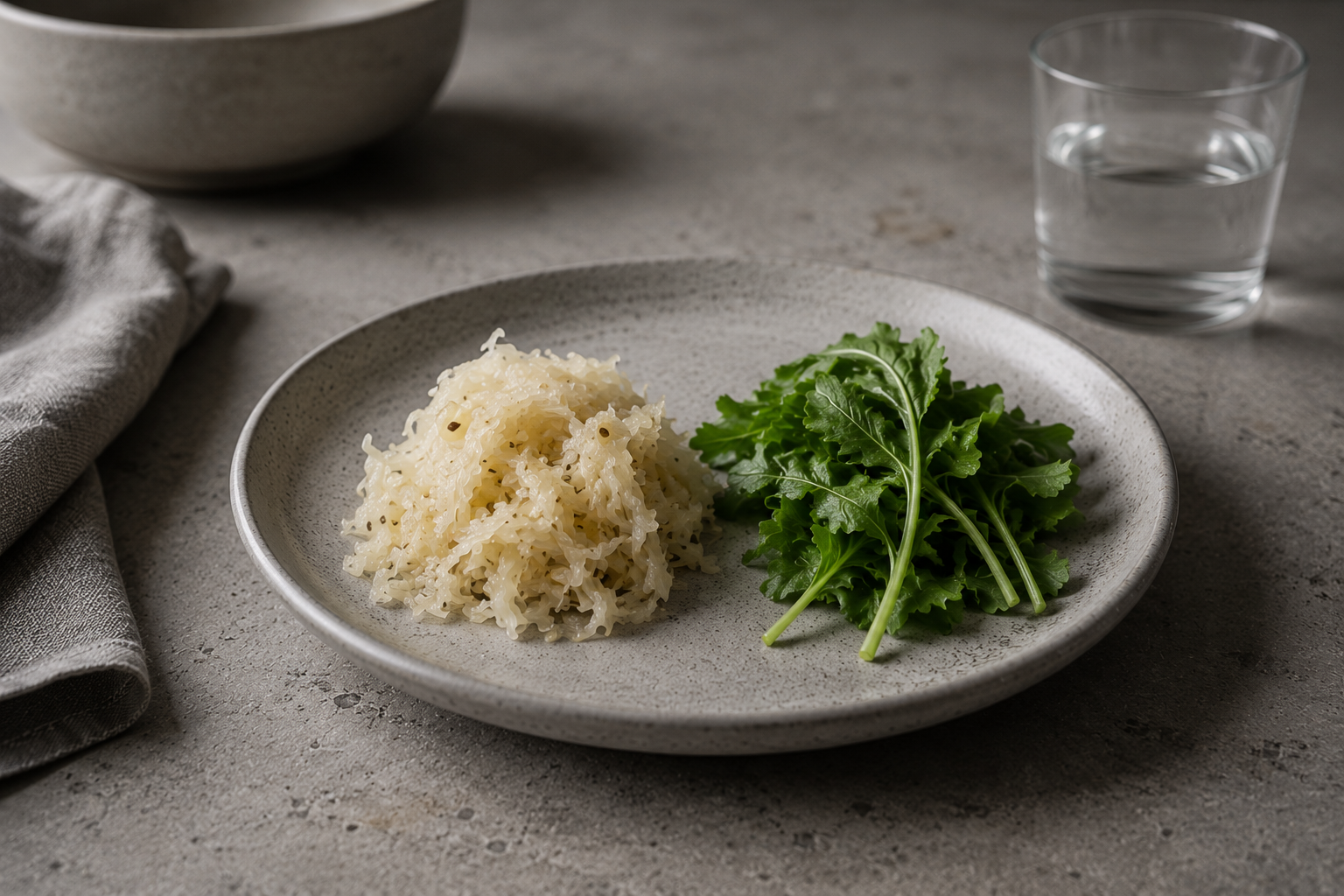
The food pattern does not change from everything you already know. Prebiotic plants and fermented foods, daily, varied. A couple of forkfuls with meals, most days, because the physiology this rides on runs on steady input across weeks, not one heroic serve.
Run the Neutral Base Method, 2 per cent salt by total weight, into the chamber vac bag, fermented in days, not weeks. Rotate the plants so the inputs stay varied. That builds the resident gut that is doing the sending.
The adjustment is how you read it. Gut flavour and texture you can judge in a day. Anything on the tone side shows up slowly and quietly, across a fortnight or more, if it shows up at all.
Do not sit there taking your own pulse after dinner and waiting for calm.
And the usual guardrail, because this is the corner of wellness that goes off the rails fastest. This is food, not treatment. If your stress or mood is genuinely not right, that is a conversation with a doctor, not a jar of kraut.
Fermented food earns a place in a good week. It does not replace care in a bad one.
Where the Neural Garden goes from here
Post one gave you the wire. This post gave you the dial, and the fact that the dial moves.
The through line is the one this whole site runs on. You are not dosing a compound or chasing a strain. You are setting up conditions and letting your biology do the work, the same way a ferment does its own job once you seal the bag and stop interfering.
On Thursday we get concrete about the two hands on the knob, the breathing and the feeding, and what a week of using both actually looks like. For now the claim is enough to sit with. The wire has a setting, and the setting is not fixed.
Come back Thursday for the follow-up, and next Monday for a new Field Note.
References
– Bravo, J. A., Forsythe, P., Chew, M. V., et al. (2011). Ingestion of Lactobacillus strain regulates emotional behavior and central GABA receptor expression in a mouse via the vagus nerve. *Proceedings of the National Academy of Sciences*, 108(38), 16050-16055. **Animal (mouse); vagotomy abolished the effect.** https://doi.org/10.1073/pnas.1102999108
– Human angle: vagal tone is measurable via heart rate variability, and slow paced breathing raises vagal tone. General human physiology, kept non-specific. No single citation carries a dose or effect size here; any specific human food-to-tone figure is deliberately left unstated as not yet settled.
Field Notes Weekly
One Field Note. Every Monday. Mechanism first, no wellness language.