The calm gut is a fed gut
Start with something uncomfortable, said plainly. Stress is not a feeling that stops at the head. Under real pressure the brain reaches down the wire and changes the gut, loosening the barrier that lines it.
That was shown directly in people. Healthy volunteers put under acute stress showed a measurable rise in the permeability of the small intestine, and the same happened when they were given the stress hormone on its own.
So the wire runs downhill. That much is settled. The question this piece answers is the one that actually matters at the bench: if you cannot switch the signal off, what decides how hard it lands?
The gut is not a bystander to your week
The easy read is that stress hits everyone’s gut the same way. It does not.
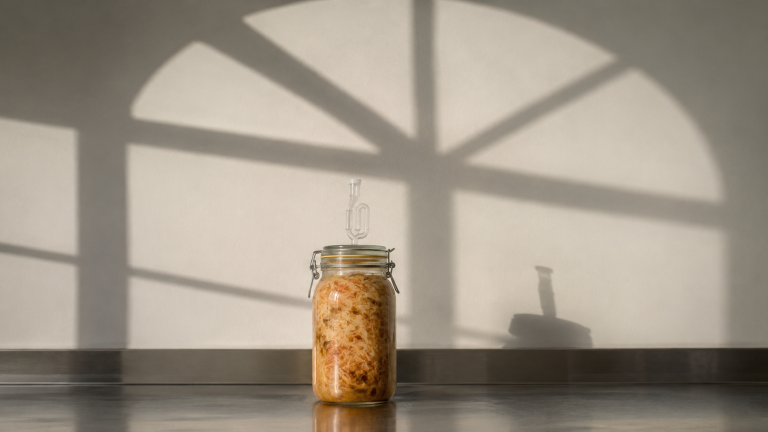
The gut you walk into a stressful week with is not a blank surface. It is a community, built over months from what you have been eating. That community is either diverse and well fed, or thin and narrow.
A diverse community does more work. It holds the barrier, it keeps the wall fed, it crowds out the opportunists. A thin one does less of all three.
So when the downward signal arrives, it is not landing on neutral ground. It is landing on whatever you have built. A fed, diverse gut has more to lose and more in reserve. It buffers the signal. It does not stop it.
That word matters. Buffer, not block. You are not making yourself stress-proof with a jar of kraut. You are changing the surface the stress lands on.

What the human evidence actually says
Here is where I have to be straight, because this is the part that gets oversold everywhere else.
The direct human work on stress and the gut is about damage, not defence. In the study in Gut, acute stress raised gut permeability in healthy people, and blocking one immune cell, the mast cell, stopped it. That is a clean, human, mechanistic result. It tells us stress loosens the barrier. It does not, on its own, tell us food tightens it back.
A second human study followed young adults through a long, punishing stretch of real stress. Over that period their gut microbes shifted and permeability rose, moving together. That study was a brutal multi-stressor, not psychology alone, and it shows things tracking side by side rather than one cleanly causing the other. Read it as direction, not proof.
Now the food side. There is genuine human trial evidence that fermented foods raise microbial diversity and lower inflammatory markers. That is real and it is in people. It is the backbone of the whole diversity argument and I lean on it hard.
But diversity in a controlled diet study and calm under stress are two different endpoints. The bridge between them, that a more diverse gut feels the stress signal less, is reasonable and consistent with the mechanism. It is not something I can hand you as a proven human number today.
There is one piece of direct human work worth putting on the table, carefully. In a controlled trial, healthy adults who spent four weeks on a diet higher in fermented foods and high-fibre plants reported lower perceived stress, and the drop tracked how closely they stuck to the diet. That is a real human result and it points the right way.
Read it for exactly what it is. It is a whole-diet change, fermented foods and fibre together, not ferments on their own. The stress was self-reported, not a measure of the gut barrier holding firmer under load. So it tells you a fed, varied gut and a calmer week travel together in people. It does not, by itself, prove the ferment tightened the wall.
So the honest position is this. The damage is proven in humans. The diversity gain from ferments is proven in humans. And a diet built this way now has direct human evidence of lower reported stress. The one thing still not nailed down is the clean mechanistic link, food measurably firming the barrier against the stress signal in a person. That is well supported by the biology and not yet handed to you as a single number. I would rather tell you that than sell you one I cannot stand behind.
Why this changes the job on the plate
If a fed, diverse gut buffers the hit, then the defence is not something you do during the stressful week. It is what you did in the eight weeks before it.
That reframes the whole thing. You cannot build resilience the morning of a hard day. You build it slowly, in the ordinary weeks, so the reserve is there when the week goes bad.
Two lines fall out of it.
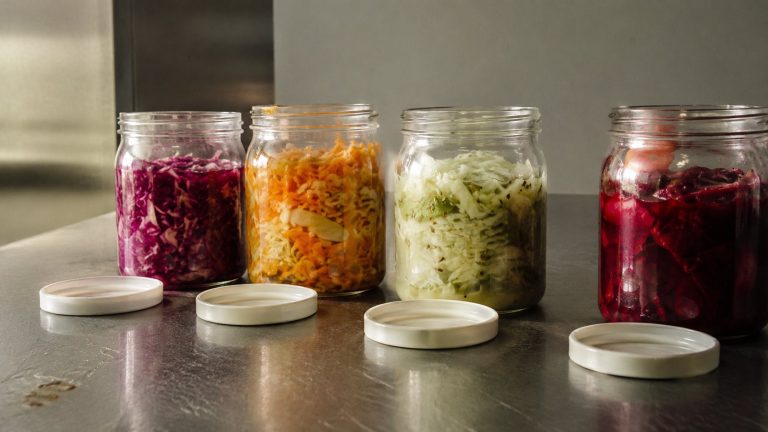
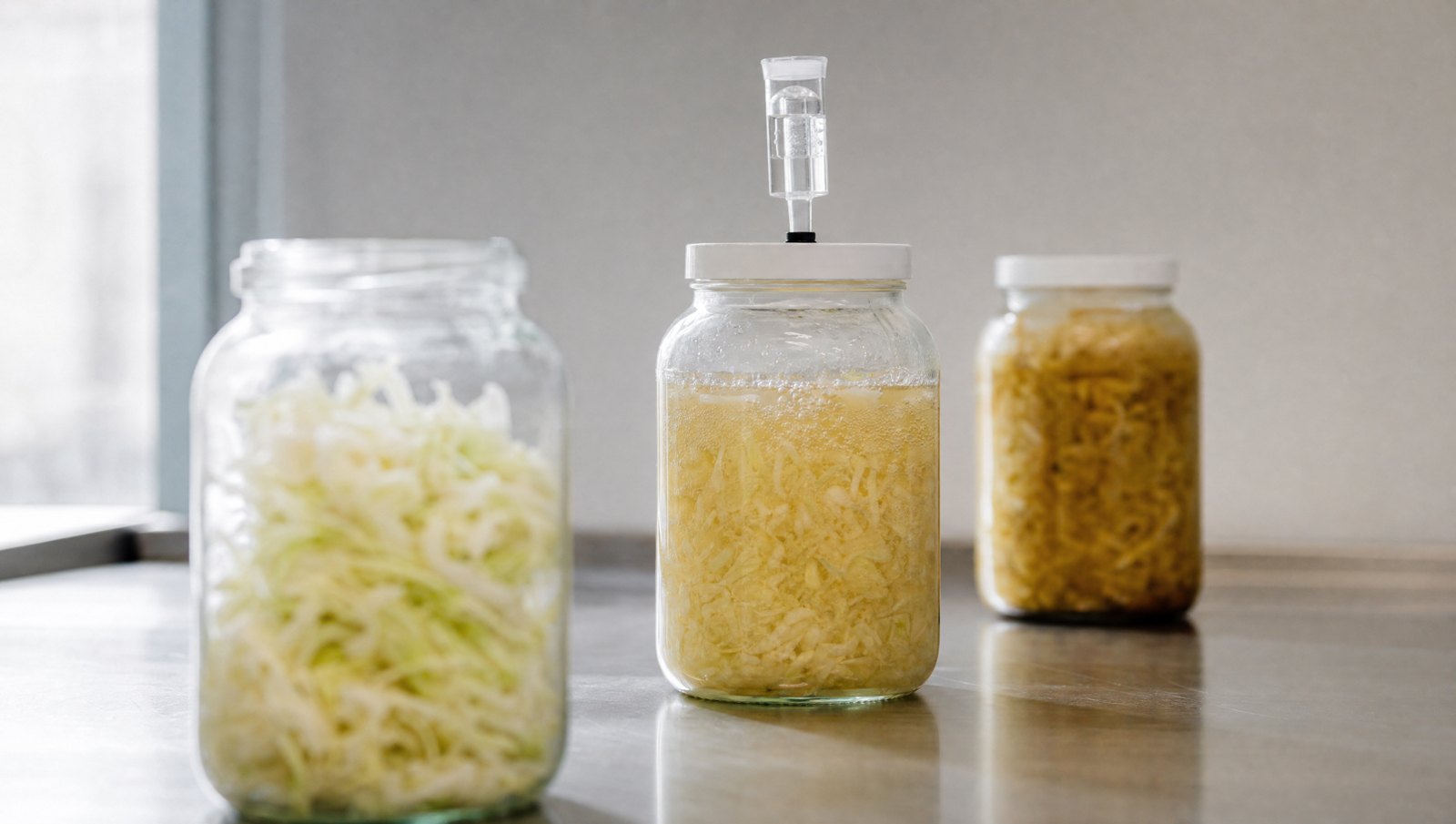
First, variety is the lever, not any single food. A diverse community comes from a diverse input. Many plants, several ferments, across the week. One heroic ingredient does not build a community. A wide, boring, repeated range does.
Second, consistency beats intensity. The gut you have on a Tuesday is the sum of months, not the sum of yesterday. So the win is the unremarkable habit held for a long time, judged across a fortnight, not the meal you ate because you read a Field Note.
And the same guardrail as always. A fed gut buffers ordinary stress. It does not treat anything. Persistent gut symptoms, real pain, blood, weight loss, are a doctor’s job, not a kitchen one. Food is the floor you build. It is not the medicine.
Where this goes next
Two signals, one wire. Stress runs down it and loosens the gut. The food you have eaten for months decides how much give there is in the wall when it does.
That is the calm gut. Not a gut that never feels stress, but one with enough built into it that the signal has less to take.
The protocol itself is its own piece. Not a calming ritual, a building one. Variety plus ferments, judged across a fortnight, not a meal. The point is not to calm yourself down. The point is to change what the gut sends up in the first place.
If you have not read the piece on why diversity is the thing worth building, start there. That is the ground this one is built on.
References
- Vanuytsel, T., et al. (2014). Psychological stress and corticotropin-releasing hormone increase intestinal permeability in humans by a mast cell-dependent mechanism. Gut, 63(8), 1293-1299. Human. doi
- Karl, J. P., et al. (2017). Changes in intestinal microbiota composition and metabolism coincide with increased intestinal permeability in young adults under prolonged physiological stress. American Journal of Physiology – GI and Liver Physiology, 312(6), G559-G571. Human. doi
- Wastyk, H. C., et al. (2021). Gut-microbiota-targeted diets modulate human immune status. Cell, 184(16), 4137-4153. Human RCT. doi
- Berding, K., et al. (2023). Feed your microbes to deal with stress: a psychobiotic diet impacts microbial stability and perceived stress in a healthy adult population. Molecular Psychiatry, 28(2), 601-610. Human. Whole-diet intervention, self-reported stress. doi
Field Notes Weekly
One Field Note. Every Monday. Mechanism first, no wellness language.